RASIT · DEV · DEFENSE
Back to selected work

Detection engineering

Defensive Identity Lab

A safe coordination hub and local analyst workbench connecting Windows, Microsoft Entra, and Microsoft Sentinel detection labs through synthetic evidence.

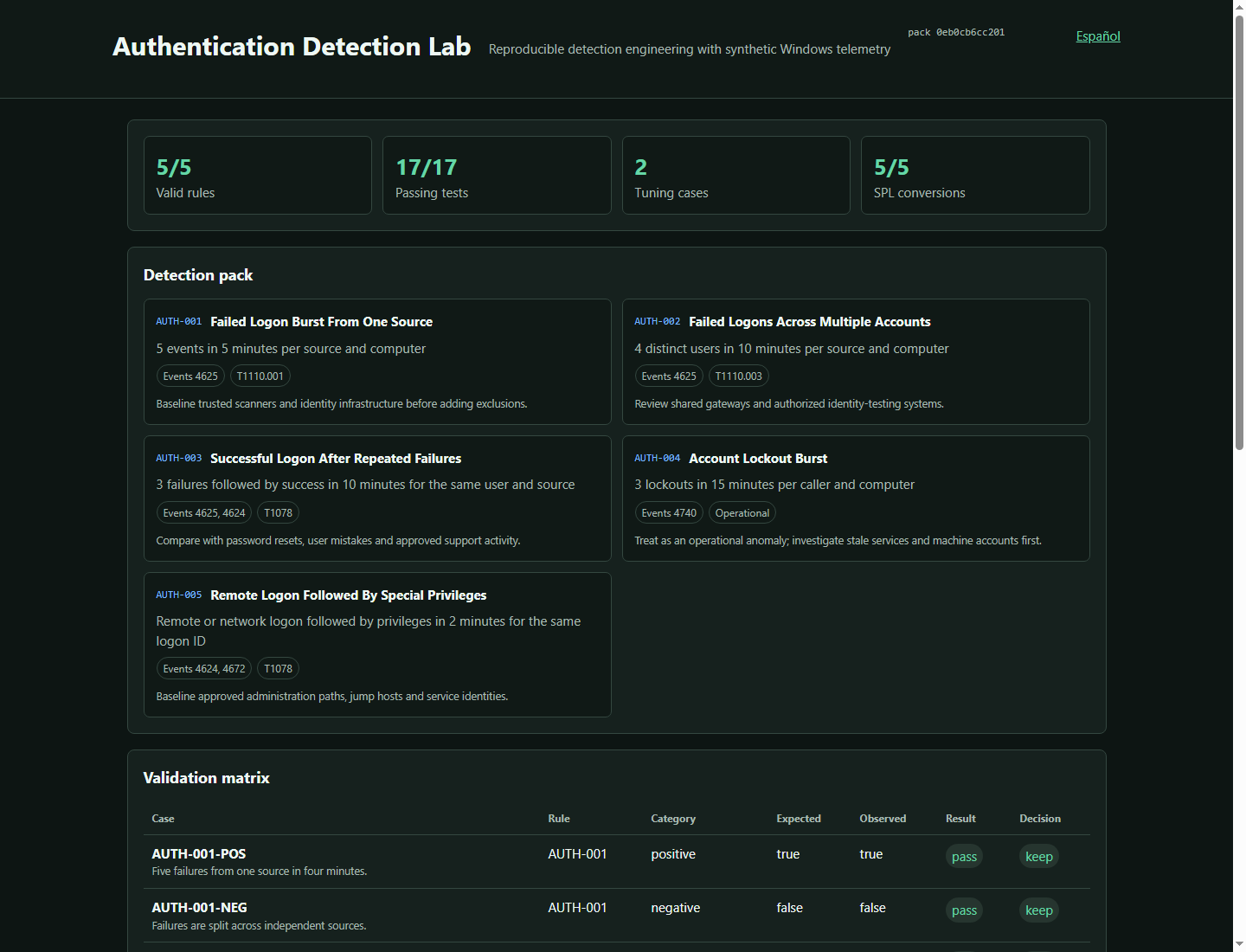
Validation report from the Windows Authentication Detection Lab
Role

Detection engineering, lab coordination, and documentation

Year

2026

Status

Public hub · synthetic training environment

Stack

Python · KQL · Sigma · PowerShell

01

The problem

Identity detections are easier to understand when endpoint authentication, cloud sign-in, and SIEM correlation can be reviewed as one path. The individual labs needed a common entry point without duplicating their evidence or introducing production data.

02

My contribution

I built the public coordination layer, validation commands, portable Windows helpers, and a local workbench that turns synthetic events into alerts, incidents, analyst notes, guided training, and exportable evidence.

03

The solution

The static hub links each lab's demo, documentation, repository, and release. A separate local Python workbench stores synthetic activity in SQLite, evaluates detection logic as events arrive, and supports both free analysis and guided SOC-style case journeys.

04

Lab architecture

Three specialized evidence layers feed a coordination hub and an optional local analyst workflow.

Key decisions

  • The hub links the three labs rather than copying their reports, demos, or documentation.
  • Guided training separates evidence inspection from knowledge checks so the answer is not displayed beside the question.
  • The local workbench remains reproducible and portable, with helper scripts for setup, readiness, updates, and evidence capture.

Safety model

  • Only synthetic telemetry is used: no production logs, credentials, tenants, tokens, malware, or offensive simulations.
  • The first VM direction is intentionally static and does not make host-changing actions.
  • Local persistence uses SQLite for events, incidents, statuses, notes, and training progress.

Validation

  • A public GitHub Actions workflow validates the coordination hub.
  • The CLI exposes build, verify, all-labs, VM readiness, and live-workbench checks.
  • Public demos and versioned releases remain available for each connected lab.
05

Public evidence

The hub links the full evidence chain: public demos, GitBook documentation, releases, and the coordinated repository.

Next case studyCorrector CARM